
On learning the South River was stocked with trout on January 21 (brown trout) and February 20 (brown and brook trout), we asked local fishing expert Tommy Lawhorne about how the fish survive cold winter temperatures. Lawhorne said young trout eat plant material and transition to insects as they mature. Adults may also consume small fish and invertebrates. “They need cool, well-oxygenated water to survive…as long as the water around them is not frozen and they can find food, they will live.” A little bit of extra reading revealed that fish are less active during the winter months; they swim more slowly and have a slower metabolism. To protect themselves from ice and predators, fish head to woody debris, rocks, submerged vegetation, and tree roots on streambanks. In other words, they adapt. Lawhorne noted the differences between the environment where the fish were born and the South River where they were released. At the cold-water hatcheries, trout have constant access to food sources and no predators – the opposite of their new home in the South River! “It is like taking a house cat and making it a barn cat,” says Lawhorne.
To find out more about fishing in and around the South River, visit the website for Shenandoah Valley chapter of Trout Unlimited or stop by The South River Fly Shop on Main Street in Waynesboro and talk to Lawhorne. The Virginia Department of Wildlife Resources provides a daily trout stocking schedule.
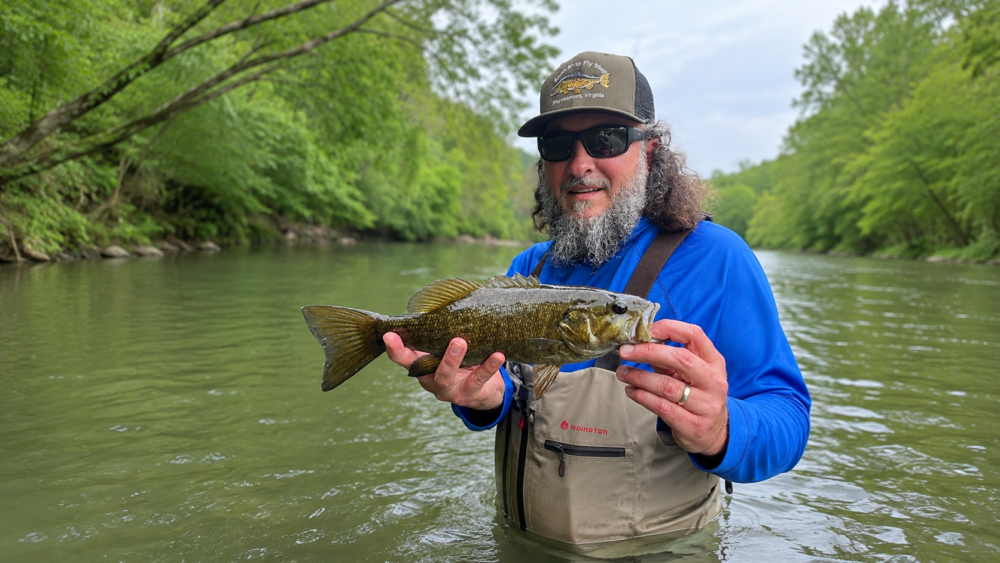
Photo: Tommy Lawhorne, a founder of the South River Fly Shop, with a fresh catch.